Bạn đang tìm kiếm cái gì?

Bên trong bộ giảm thanh kiểu hấp thụ, lõi đục lỗ chỉ là một phần của hệ thống âm thanh. Vật liệu bao quanh lõi đó có ảnh hưởng trực tiếp đến tiếng ồn khí thải, chất lượng âm thanh, độ ổn định nhiệt, tuổi thọ của vật liệu cách âm và tình trạng lâu dài của bộ giảm thanh.
Vật liệu đó thường được biết đến với tên gọi làvật liệu giảm thanh.
Tùy thuộc vào thiết kế hệ thống ống xả và thị trường, cùng một bộ phận đó cũng có thể được mô tả như sau:vật liệu đóng gói ống giảm thanh,vật liệu giảm âm ống xảVật liệu giảm âm, vật liệu cách âm ống xả, vật liệu lấp đầy âm thanh, len giảm âm hoặc vật liệu giảm chấn ống xả.
BSTFLEX cung cấp và phát triển các vật liệu đóng gói chịu nhiệt cao cho ống pô xe máy, hệ thống ống xả ô tô, ống pô xe đua, ống pô công nghiệp, máy phát điện và các cụm ống xả khác.
Khám phá toàn bộ các sản phẩmvật liệu đóng gói ống giảm thanh.
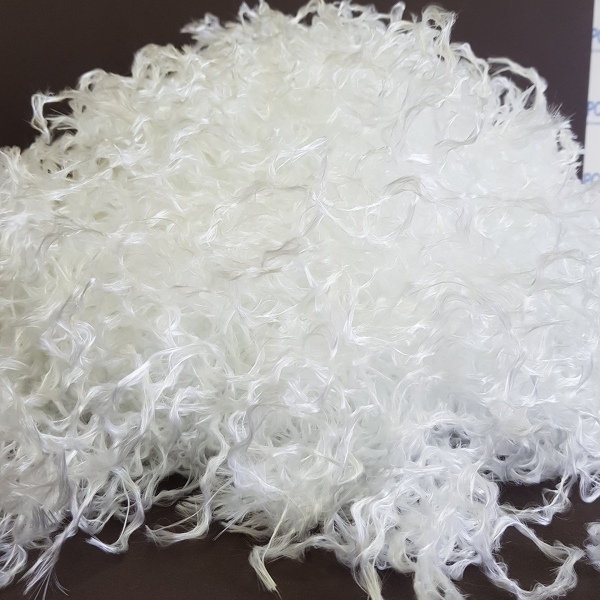
Một bộ giảm âm hấp thụ điển hình được chế tạo dựa trên một cấu trúc tương đối đơn giản:
Luồng khí thải → ống đục lỗ → lớp sợi bảo vệ → vật liệu cách âm → vỏ ngoài
Khí thải đi qua lõi có lỗ. Năng lượng âm thanh truyền qua các lỗ này và đi vào vật liệu sợi xung quanh.
Thay vì chỉ dựa vào các khoang hoặc vách ngăn hạn chế, vật liệu nhồi này chuyển đổi một phần năng lượng âm thanh thành một lượng nhiệt rất nhỏ thông qua ma sát bên trong cấu trúc sợi.
Để hệ thống tiếp tục hoạt động, bao bì phải được giữ nguyên:
ổn định nhiệt,
đủ khả năng phục hồi,
Chống ăn mòn do xung khí thải,
được đóng gói đúng cách xung quanh lõi,
và có khả năng duy trì cấu trúc sợi sau nhiều lần gia nhiệt và làm nguội.
Đây là lý do tại sao việc lựa chọn vật liệu nhồi giảm âm khí thải chỉ dựa trên định mức nhiệt độ hiếm khi là đủ.
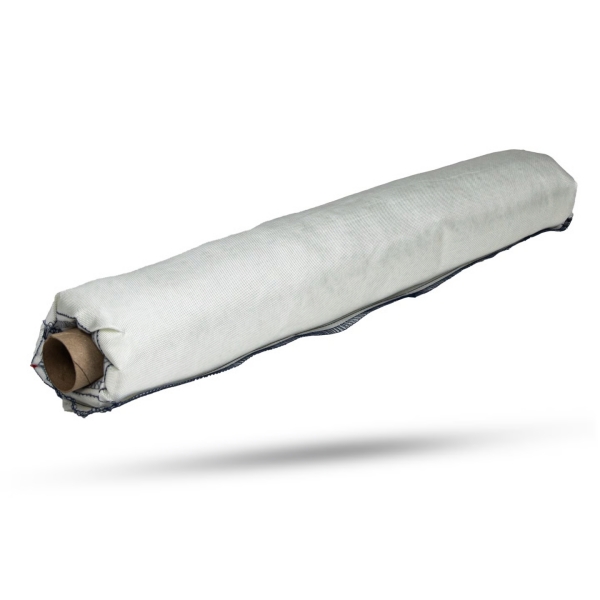
Vật liệu cách âm thực hiện nhiều chức năng cùng một lúc.
Cấu trúc sợi mở hấp thụ năng lượng âm thanh do xung khí thải tạo ra. Điều này đặc biệt quan trọng trong các bộ giảm thanh kiểu thẳng và hiệu suất cao, nơi luồng khí đi qua một ống trung tâm có lỗ.
Tình trạng đóng gói có thể ảnh hưởng không chỉ đến áp suất âm thanh mà còn cả âm thanh khí thải.
Ống pô mới thường tạo ra âm thanh êm dịu hơn, ít tiếng kim loại hơn. Khi các sợi bên trong bị phân hủy, nén lại, di chuyển hoặc biến mất, ống pô có thể trở nên sắc nét và ồn ào hơn đáng kể.
Lớp đệm tạo ra sự ngăn cách giữa ống đục lỗ nóng và vỏ giảm âm.
Mặc dù vật liệu cách âm chủ yếu là vật liệu giảm tiếng ồn, nhưng đặc tính nhiệt của nó ảnh hưởng đến nhiệt độ vỏ và độ bền của các bộ phận liền kề.
Vật liệu đóng gói ổn định giúp giảm tải trọng âm thanh và nhiệt trực tiếp lên vỏ ngoài. Một hệ thống đóng gói được thiết kế tốt cũng có thể giảm thiểu sự hư hỏng do rung động bên trong bộ giảm âm.
Không có một loại vật liệu nhồi giảm thanh nào lý tưởng cho mọi hệ thống ống xả.
Nhiệt độ, vận tốc khí, loại động cơ, khoảng thời gian bảo dưỡng dự kiến, mục tiêu âm thanh, hình dạng bộ giảm âm và phương pháp sản xuất đều ảnh hưởng đến việc lựa chọn vật liệu.
Sợi thủy tinh vẫn là một trong những vật liệu được sử dụng rộng rãi nhất trong các bộ giảm âm hấp thụ.
Nó kết hợp mật độ khối lượng thấp với diện tích bề mặt sợi lớn, mang lại khả năng hấp thụ âm thanh tốt mà không làm tăng trọng lượng quá mức.
Các hình thức điển hình bao gồm:
sợi thủy tinh rời,
sợi thủy tinh liên tục,
sợi thủy tinh có cấu trúc bề mặt,
thảm sợi thủy tinh,
gối đệm bằng sợi thủy tinh,
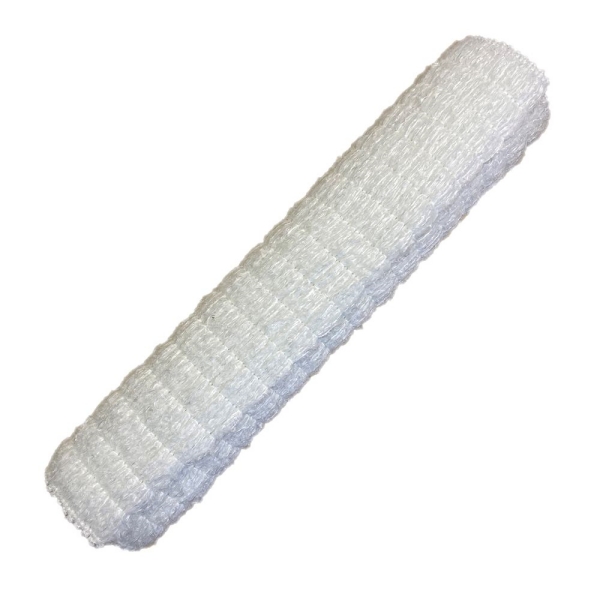
Vớ đóng gói định hình sẵn,
và sợi thủy tinh được chứa bên trong các túi lưới thủy tinh dệt.
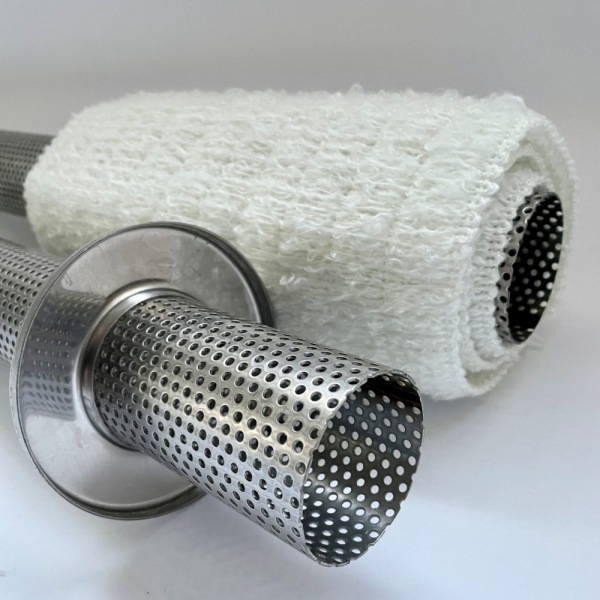
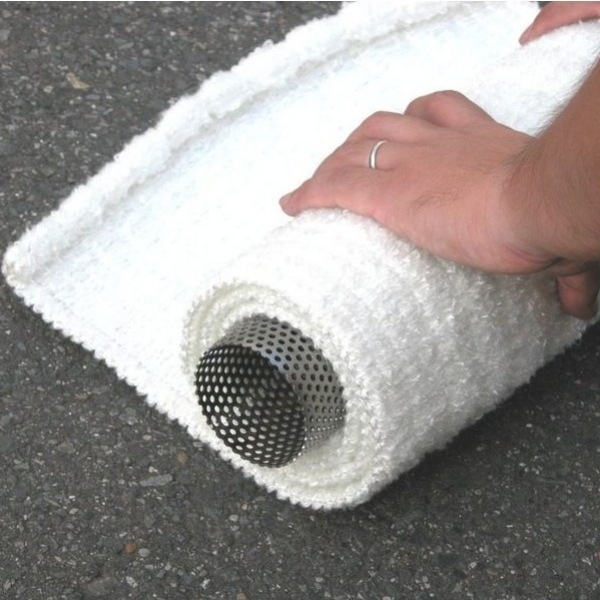
BSTFLEX sản xuất mộtỐng giảm thanh bằng sợi thủy tinh với lớp lưới dệt bằng sợi thủy tinh.Dành cho các ứng dụng ưu tiên việc lắp đặt có kiểm soát và giữ chặt sợi quang hơn là đóng gói lỏng lẻo.
Vật liệu đóng gói bằng sợi thủy tinh thường được lựa chọn cho:
ống pô xe máy,
Ống giảm thanh cho xe ATV và UTV,
ống xả hiệu suất cao cho ô tô,
bộ giảm thanh thay thế,
hệ thống ống xả dành cho xe đua,
và nhiều loại ống giảm thanh hấp thụ OEM.
Ưu điểm chính của nó là sự cân bằng giữa hiệu quả âm thanh, trọng lượng, khả năng sản xuất và chi phí.
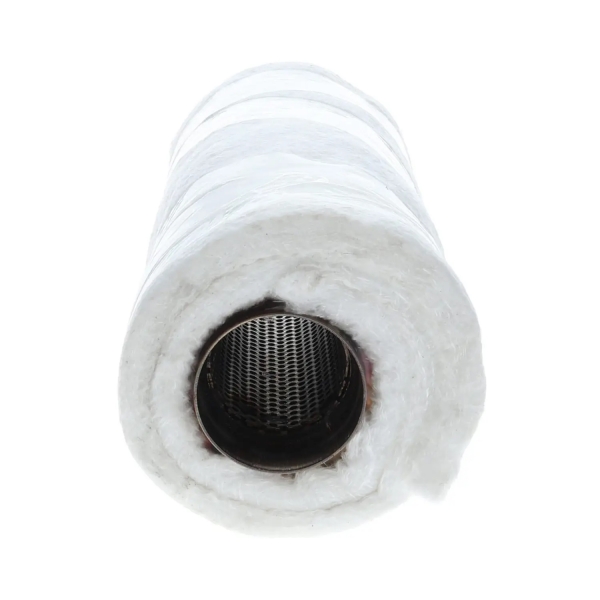
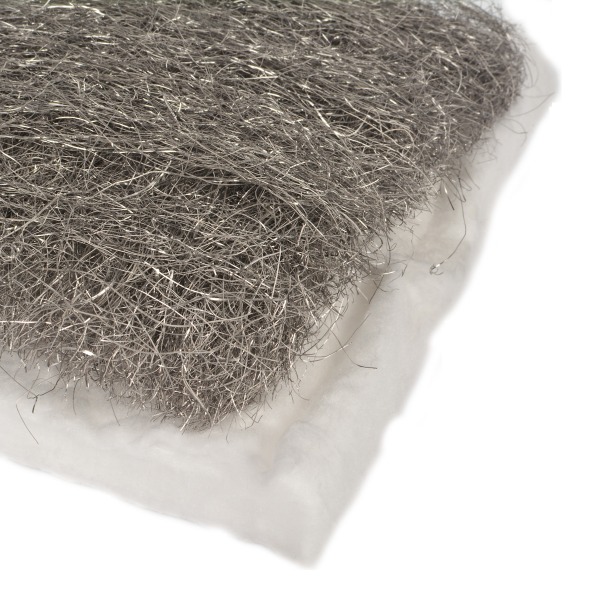
Bông thép không gỉ có chức năng hơi khác một chút.
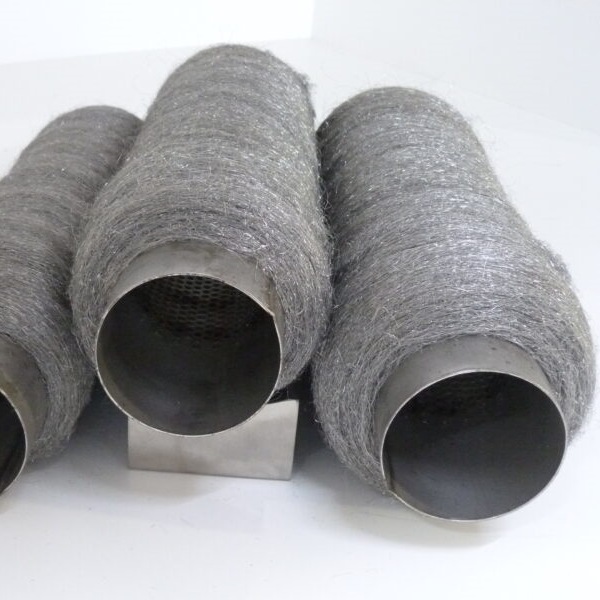
Nó có thể được sử dụng như một vật liệu đóng gói, nhưng trong nhiều hệ thống ống xả hiệu suất cao, nó được lắp đặt trực tiếp xung quanh ống đục lỗ như một lớp bảo vệ.
Thông thường, cách sắp xếp sẽ như sau:
Lõi đục lỗ → len thép không gỉ → vật liệu nhồi sợi thủy tinh → vỏ ống giảm thanh
Lớp thép không gỉ giúp bảo vệ các sợi âm mềm hơn khỏi:
khí thải rất nóng,
xung tốc độ cao,
sự nhiễu loạn xung quanh các lỗ thủng,
tiếp xúc với lửa,
và hiện tượng thổi sợi quang tiến triển.
Cấu trúc này đặc biệt hữu ích trong các hệ thống ống xả đòi hỏi cao của xe máy, xe đua, động cơ tăng áp và các hệ thống ống xả công suất lớn.
Vì lý do này, việc so sánh sợi thủy tinh và len thép không gỉ như thể chỉ có thể sử dụng một loại vật liệu duy nhất đôi khi là không chính xác. Trong nhiều bộ giảm thanh, chúng thực hiện các chức năng bổ sung cho nhau.
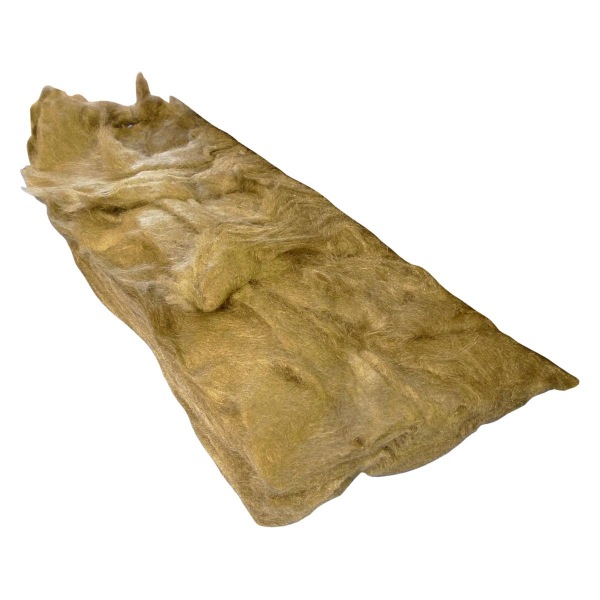
Trong trường hợp nhiệt độ khí thải quá cao, có thể xem xét sử dụng sợi gốm.
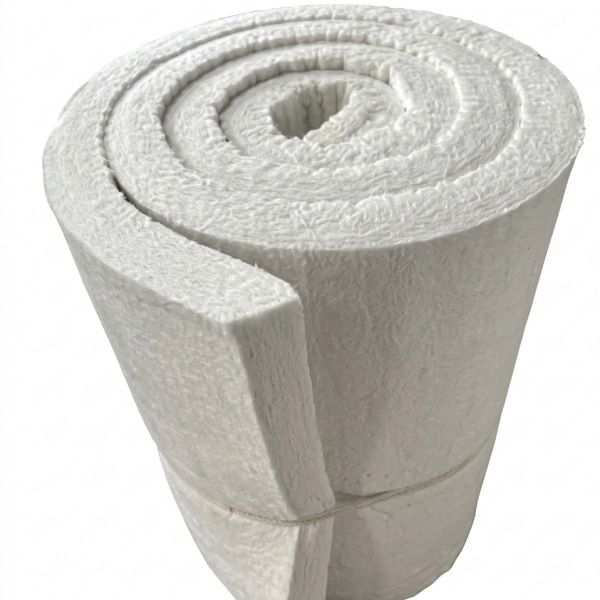
Vật liệu nhồi giảm âm bằng sợi gốm rất hấp dẫn nhờ khả năng chịu nhiệt cao và độ dẫn nhiệt tương đối thấp.
Các ứng dụng tiềm năng bao gồm:
high-temperature industrial silencers,
heavy-duty engine exhaust systems,
certain generator exhaust assemblies,
thermal-intensive exhaust equipment,
and special mufflers operating beyond the practical range of conventional glass fiber.
However, the highest temperature material is not automatically the best acoustic material.
Density, fiber diameter, resilience, vibration resistance, handling requirements, and long-term fiber stability must also be evaluated.
Basalt fiber provides another option between conventional glass fiber and more specialized high-temperature materials.
Produced from volcanic basalt rock, continuous basalt fibers can provide:
good thermal resistance,
mechanical stability,
chemical resistance,
vibration resistance,
and useful acoustic performance.
Basalt muffler packing can therefore be considered for automotive, motorcycle, heavy-duty, or industrial exhaust systems where designers want a mineral-fiber solution with elevated thermal capability.
| Packing Material | Primary Strength | Typical Position | Suitable Applications |
|---|---|---|---|
| Fiberglass | Efficient acoustic absorption | Main packing layer | Motorcycle, automotive, performance exhaust |
| Stainless Steel Wool | Heat and erosion protection | Around perforated core or as metallic packing | Racing, turbo, high gas velocity exhaust |
| Ceramic Fiber | Extreme-temperature capability | Main or supplementary insulation layer | Industrial and severe-temperature silencers |
| Basalt Fiber | Thermal and mechanical durability | Main acoustic packing layer | Heavy-duty, automotive and industrial exhaust |
The correct construction may combine two or more materials rather than using a single fiber throughout the silencer.
Two mufflers using exactly the same fiber can perform differently simply because the material was installed at different densities.
This is one of the most overlooked aspects of exhaust muffler packing.
If the fiber mass is insufficient, several problems can develop:
reduced acoustic absorption,
rapid fiber movement,
localized empty areas,
increased exhaust noise,
accelerated blowout.
The fibers may also redistribute under vibration and exhaust pulsation.
Over-compression creates another set of problems.
When fibrous material is compressed excessively, the void structure needed for acoustic energy dissipation changes.
The result can be:
poorer sound absorption in certain frequency ranges,
increased silencer weight,
difficult assembly,
reduced fiber resilience,
and unnecessary material consumption.
The goal is therefore not to put the maximum possible amount of packing inside the muffler.
The objective is to achieve a controlled and repeatable packing density suitable for the muffler geometry and target acoustic performance.
Muffler packing works in one of the harshest environments on a vehicle.
The material may experience thousands of heating and cooling cycles together with vibration and rapidly fluctuating exhaust pressure.
Several deterioration mechanisms can occur.
High-velocity exhaust gases passing through perforations gradually attack exposed fibers.
This is often called fiber blowout.
Continuous exposure to elevated temperature can reduce fiber resilience and alter the packing structure.
Vibration can cause loose packing to migrate or compact.
The silencer may develop areas with insufficient material even when the total amount of packing originally installed was correct.
Condensation, oil residue, incomplete combustion products, and other deposits can affect the condition of the acoustic fibers.
A theoretically suitable material may still fail prematurely if it is packed unevenly or installed at the wrong density.
Muffler packing deterioration is not always visible from outside the silencer.
Several operating changes can indicate that the material should be inspected.
Common signs include:
A noticeable increase in exhaust volume
The muffler gradually becomes louder because the effective acoustic mass has decreased.
A sharper or metallic exhaust note
When the packing layer becomes thin, sound energy interacts more directly with the metal shell.
Fibers coming from the tailpipe
Visible strands or particles at the outlet may indicate packing migration or blowout.
Hot spots on the muffler casing
Loss or movement of the internal packing can create uneven thermal distribution.
Rattling or internal movement
This can indicate loose material or deterioration of internal components.
Motorcycle silencers place especially high demands on packing material because the available volume is limited while exhaust temperatures and pulse velocity can be high.
For this reason, motorcycle exhaust packing normally needs to combine:
strong acoustic absorption,
low weight,
good thermal stability,
resistance to vibration,
easy repacking,
and controlled fiber retention.
Both two-stroke and four-stroke engines use packed silencers, but their operating environments differ considerably.
Two-stroke exhaust packing can be affected heavily by oil, combustion residue, and frequent repacking cycles.
Four-stroke performance exhausts may expose the material to higher sustained temperatures and aggressive exhaust pulses.
Selecting packing purely by motorcycle type is therefore insufficient. Muffler construction and engine operating conditions should also be considered.
Performance exhaust manufacturers often need to reduce sound without introducing excessive backpressure.
Straight-through absorption mufflers are useful in this situation because the exhaust path remains relatively open.
The acoustic packing surrounding the perforated core becomes a critical component.
Depending on the application, manufacturers may specify:
continuous fiberglass packing,
stainless steel wool core protection,
composite stainless/fiberglass systems,
basalt fiber,
or specialized high-temperature fibers.
For racing exhaust systems, packing retention becomes particularly important because high gas velocities can rapidly damage exposed loose fibers.
Industrial silencers operate under a different set of requirements.
Applications can include:
diesel generators,
gas engines,
compressors,
turbines,
exhaust treatment equipment,
heavy machinery,
power generation systems,
and industrial ventilation or acoustic control systems.
In these installations, designers may prioritize:
continuous operating temperature,
acoustic absorption over a specified frequency range,
long maintenance intervals,
fiber stability,
corrosion resistance,
and repeatable packing density.
Industrial buyers therefore often purchase muffler packing by engineering specification rather than simply selecting a consumer repacking kit.
Manufacturers normally have several ways to introduce fiber into a silencer.
Loose fibers or strands allow considerable flexibility during assembly.
They work well where the muffler geometry varies or packing is performed manually.
The challenge is maintaining consistent density from one muffler to another.
Mats provide more predictable thickness and make material handling easier during production.
They are especially suitable when the silencer has a regular cylindrical geometry.
A measured amount of fiber is enclosed inside a lightweight retaining fabric or mesh.
This allows manufacturers to control fiber mass before installation.
A tubular packing assembly can be fitted around the perforated core, reducing installation time and helping maintain circumferential coverage.
BSTFLEX develops customized packing formats including fiberglass-based assemblies for OEM exhaust production.
A purchase specification should contain more information than simply:
“Fiberglass muffler packing.”
For repeatable production, buyers should consider supplying:
| Specification Item | Why It Matters |
|---|---|
| Fiber material | Determines thermal and mechanical behavior |
| Silencer internal diameter | Defines available packing space |
| Perforated core diameter | Determines required packing thickness |
| Muffler length | Determines fiber quantity |
| Target packing density | Influences acoustic performance |
| Continuous exhaust temperature | Determines material suitability |
| Peak temperature | Identifies short-duration thermal exposure |
| Engine type | Helps evaluate exhaust environment |
| Packing format | Loose fiber, mat, pillow, sock or custom assembly |
| Annual quantity | Determines manufacturing and packaging method |
When these parameters are available, the packing can be engineered around the silencer rather than supplied as a generic bulk fiber.
Manual loose packing creates several variables.
One operator may install more material than another. Distribution around the perforated tube may also vary.
Preformed systems reduce this variability.
A packing sock, bag, pillow, or measured mat can provide:
defined material weight,
more uniform circumferential distribution,
reduced fiber handling,
shorter assembly time,
cleaner production,
improved batch repeatability.
For medium- and high-volume exhaust manufacturing, those manufacturing benefits can be as important as the thermal properties of the fiber itself.
A practical starting point is to identify the dominant failure risk.
Consider fiberglass as the primary acoustic layer.
Consider a stainless steel wool or metallic mesh protection layer before the main fiber packing.
Evaluate ceramic or other elevated-temperature fibers.
Consider materials and packing forms with stronger dimensional stability and controlled retention.
Consider preformed socks, pillows, mats, or custom packing assemblies rather than uncontrolled loose fill.
BSTFLEX manufactures high-temperature thermal and acoustic materials for exhaust systems and can support both replacement packing and OEM silencer production.
Available development options can include:
fiberglass muffler packing,
glass fiber silencer packing,
stainless steel wool packing,
ceramic fiber packing,
basalt-based packing,
loose fiber,
mats,
rolls,
packing bags,
packing pillows,
tubular packing socks,
and customized preformed assemblies.
Sizes, packing weight, fiber combination, retaining construction, and packaging can be developed according to customer drawings, samples, or silencer dimensions.
For applications requiring easier assembly and improved fiber containment, see theFiberglass Muffler Packing Sock with Woven Glass Mesh Bag.
For additional material options, visit theBSTFLEX Muffler Packing category.
There is no universal best material. Fiberglass is widely used because of its acoustic efficiency and weight, stainless steel wool is effective for protecting packing near the perforated core, while ceramic and basalt fibers may be selected where higher temperature capability is required.
Yes. Fiberglass is one of the most common acoustic materials used in absorption-type exhaust silencers because its fibrous structure provides efficient sound absorption while remaining relatively lightweight.
It can be used alone in some designs, but stainless steel wool and fiberglass often perform different functions. Stainless steel wool can protect the inner packing from exhaust erosion, while fiberglass provides the principal acoustic absorption layer.
Packing can escape because of fiber erosion, excessive gas velocity, damaged retaining mesh, incorrect packing density, thermal degradation, or deterioration around the perforated core.
Not necessarily. Excessive compression can reduce the open fiber structure needed for effective acoustic absorption. Packing density should be controlled rather than maximized.
There is no fixed interval for every exhaust system. Replacement frequency depends on exhaust temperature, engine type, riding conditions, packing material, gas velocity, silencer design, and operating hours.
Có. Bao bì OEM có thể được cung cấp theo đường kính lõi, đường kính vỏ, chiều dài bộ giảm âm, trọng lượng bao bì mục tiêu, thông số kỹ thuật vật liệu, yêu cầu nhiệt độ và kiểu lắp đặt ưa thích.
Trong thiết kế hệ thống ống xả, phần vỏ giảm thanh có thể nhìn thấy thường nhận được nhiều sự chú ý nhất, nhưng vật liệu nằm giữa lớp vỏ đó và lõi đục lỗ lại quyết định một phần quan trọng đến đặc tính âm thanh của bộ giảm thanh.
Một thiết kế đúng đắnvật liệu đóng gói ống giảm thanhKhông chỉ đơn thuần là chịu được nhiệt độ cao.
Nó phải duy trì mối quan hệ phù hợp giữa cấu trúc sợi, mật độ, khả năng hấp thụ âm thanh, khả năng chống mài mòn và tính nhất quán trong lắp đặt.
Đối với các loại ống pô xe máy và ô tô tiêu chuẩn, sợi thủy tinh vẫn là một trong những lựa chọn linh hoạt nhất. Đối với môi trường khí thải khắc nghiệt, len thép không gỉ, sợi gốm, sợi bazan hoặc các lớp kết hợp nhiều lớp có thể kéo dài tuổi thọ sử dụng.
Đối với các nhà sản xuất ống xả OEM, bước tiếp theo không chỉ đơn giản là lựa chọn loại sợi.
Nó đang định nghĩa điều đúng đắn.hệ thống vật liệu đóng gói giảm âm khí thảibao gồm hình dạng ống giảm thanh, nhiệt độ khí thải, mục tiêu âm thanh và phương pháp sản xuất.
BSTFLEX có thể sản xuất và tùy chỉnh vật liệu đệm giảm âm cho hệ thống ống xả của xe máy, ô tô, xe đua, máy phát điện, tàu thuyền và công nghiệp.
Hãy liên hệ với BSTFLEX cung cấp kích thước bộ giảm âm, nhiệt độ hoạt động, định dạng đóng gói yêu cầu và số lượng hàng năm để được tư vấn lựa chọn vật liệu và phát triển mẫu.

No.10, Chuangxin North Road, Nanshan Park, Ningguo Economic and Technological Development Zone, Ningguo City, Anhui Province, China
điện thoại/Whatsapp : 0086-15856303740
e-mail : sales@bstbraidedsleeve.com
Skype : vanesa-cheng