Bạn đang tìm kiếm cái gì?
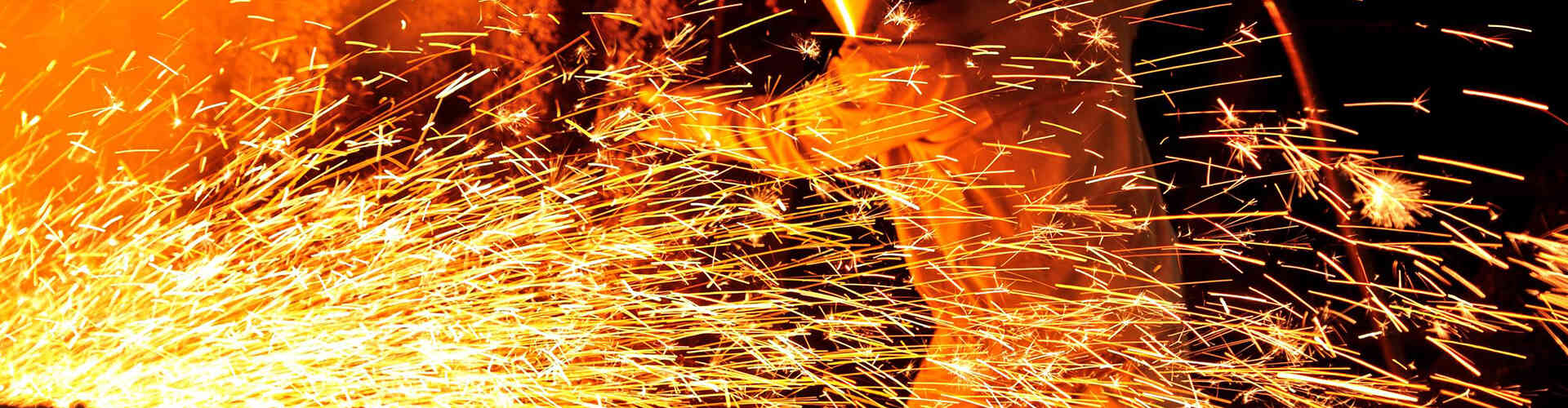
Hệ thống ống xả tạo ra một trong những nguồn nhiệt tập trung nhất trong xe hoặc động cơ. Ống góp, ống dẫn và ống xả chỉ có thể hoạt động ở khoảng cách ngắn so với dây điện, ống dẫn, cảm biến, các tấm thân xe và các bộ phận nạp khí. Khi không gian bị hạn chế, việc kiểm soát nhiệt độ đó trở thành một phần của thiết kế hệ thống chứ không phải là một phụ kiện tùy chọn.
bọc ống xảĐây là một trong những cách đơn giản nhất để đặt vật liệu cách nhiệt trực tiếp lên đường ống nóng.
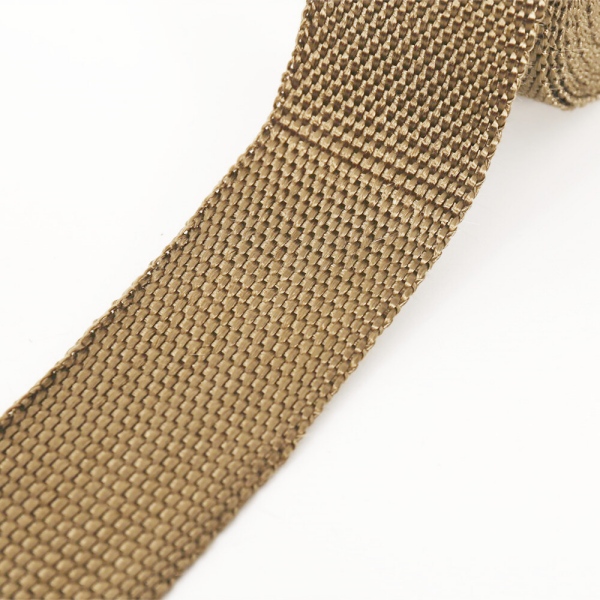
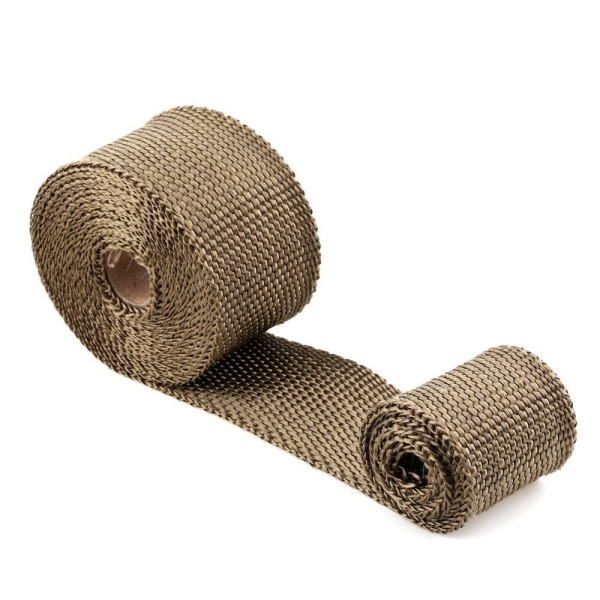
Cũng được mô tả làbăng cách nhiệt ống xả, băng quấn ống pô, băng quấn cổ pôHoặc màng cách nhiệt ống xả, đó là một loại vải dệt chịu nhiệt cao được lắp đặt xung quanh ống xả theo từng lớp chồng lên nhau. Có nhiều hệ thống sợi khác nhau dành cho các phạm vi nhiệt độ và môi trường hoạt động khác nhau.
BSTFLEX sản xuất một loạt các sản phẩm đa dạng.bọc cách nhiệt cho ống xả và cổ pôỨng dụng trong quản lý nhiệt khí thải cho ô tô, xe máy, thể thao đua xe, động cơ diesel, hàng hải và công nghiệp.
Chức năng chính của lớp bọc ống xả là cách nhiệt.
Ống xả trần truyền nhiệt ra môi trường xung quanh bằng bức xạ và đối lưu. Việc bọc ống sẽ tạo thêm một lớp vải cách nhiệt giữa kim loại nóng và các bộ phận lân cận.
Việc lựa chọn loại băng quấn phù hợp có thể giúp ích:
giảm nhiệt bức xạ xung quanh ống xả;
Hạn chế tối đa việc tiếp xúc nhiệt với ống dẫn, dây điện và cảm biến;
giảm sự truyền nhiệt về phía sàn nhà và vách ngăn;
Cải thiện khả năng kiểm soát nhiệt độ trong khoang động cơ chật hẹp;
Bảo vệ người vận hành khỏi tiếp xúc ngẫu nhiên với các bề mặt nóng;
Giữ lại nhiều năng lượng nhiệt hơn trong hệ thống ống xả.
Điểm cuối cùng này giải thích tại sao băng cách nhiệt khí thải được sử dụng rộng rãi xung quanh cổ pô và ống xả của bộ tăng áp.
Tuy nhiên, không nên coi băng quấn ống xả là vật liệu sửa chữa đa năng. Băng quấn cách nhiệt tiêu chuẩn được thiết kế để quản lý nhiệt chứ không phải để bịt kín các vết nứt trên ống hoặc sửa chữa rò rỉ khí thải.
Lựa chọnbọc ống xảChỉ đánh giá dựa trên màu sắc hoặc độ rộng là một sai lầm thường gặp.
Hiệu suất của hệ thống lắp đặt hoàn chỉnh phụ thuộc vào nhiều yếu tố cùng tác động:
| Yếu tố lựa chọn | Tại sao điều đó lại quan trọng |
|---|---|
| Nhiệt độ khí thải | Xác định hệ thống cáp quang cần thiết |
| Đường kính ống | Ảnh hưởng đến chiều rộng cuộn và chiều dài cuộn cần thiết. |
| Hình học ống xả | Các đoạn uốn cong gấp khúc và các bộ thu đòi hỏi tính linh hoạt cao hơn. |
| Sự chồng chéo | Ảnh hưởng đến độ dày lớp cách nhiệt và lượng vật liệu tiêu thụ. |
| Tiếp xúc với độ ẩm | Quan trọng cho các ứng dụng đường bộ, hàng hải và ngoài trời. |
| Ô nhiễm dầu và nhiên liệu | Có thể ảnh hưởng đến tuổi thọ sử dụng lâu dài. |
| Rung động | Ảnh hưởng đến độ bền và phương pháp lắp đặt. |
| Tần suất bảo trì | Màng bọc cố định có thể không phù hợp với các bộ phận được tháo lắp thường xuyên. |
Vì lý do này, vật liệu bọc ống xả tốt nhất cho cổ pô xe máy có thể không phù hợp với ống xả turbo hoặc ống xả diesel công nghiệp.
Sợi thủy tinh vẫn là một trong những vật liệu được sử dụng rộng rãi nhất để cách nhiệt cho hệ thống ống xả thông thường.
Nó có tính linh hoạt, tiết kiệm và có thể được dệt thành các dải hẹp, dễ dàng uốn cong quanh các khúc cua và chỗ nối ống. Băng quấn sợi thủy tinh thường được sử dụng trên:
Ống dẫn khí thải cho động cơ ô tô hút khí tự nhiên;
Ống xả xe máy;
ống thu gom;
Ống xả chung;
Hệ thống đường ống công nghiệp có nhiệt độ từ trung bình đến cao.
BSTFLEX cung cấp một số cấu trúc làm từ sợi thủy tinh, bao gồm:Bọc cách nhiệt ống xả Pro Black, kết hợp lớp cách nhiệt bằng sợi thủy tinh chịu nhiệt cao với cấu trúc bên ngoài bằng thép không gỉ để tăng cường khả năng chống mài mòn và va đập.
Sợi thủy tinh thường là điểm khởi đầu cho các ứng dụng mà chi phí, tính linh hoạt và khả năng kiểm soát nhiệt độ thực tế quan trọng hơn khả năng chịu nhiệt độ tối đa.
Thuật ngữbọc ống xả titanThuật ngữ này được sử dụng rộng rãi trong thị trường ô tô hiệu suất cao, nhưng thông thường nó không có nghĩa là lớp bọc đó chứa titan kim loại.
Loại sản phẩm này thường được sản xuất từ sợi bazan hoặc sợi có nguồn gốc từ đá núi lửa.
Sợi bazan có độ dẻo dai tốt, khả năng chịu nhiệt và chịu được chu kỳ nhiệt lặp đi lặp lại. Chúng thường được lựa chọn cho:
tiêu đề hiệu suất;
ống xả turbo;
Hệ thống ống xả xe máy;
Hệ thống ống xả dành cho xe đua;
Các công trình lắp đặt này chịu nhiệt độ cao hơn so với các ứng dụng sợi thủy tinh thông thường.
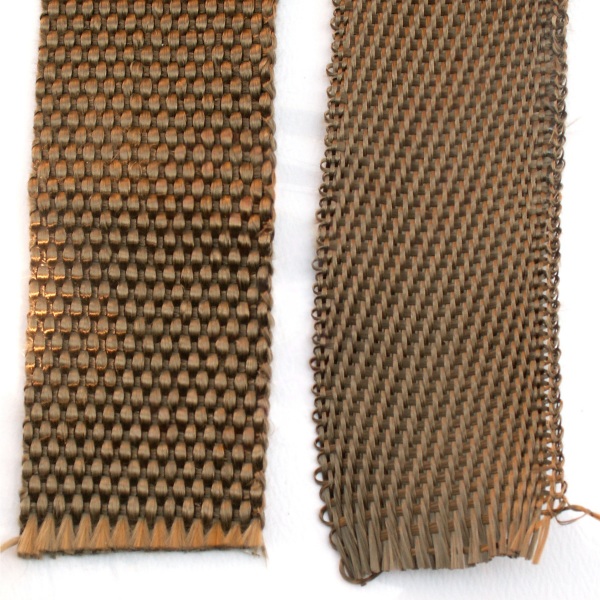
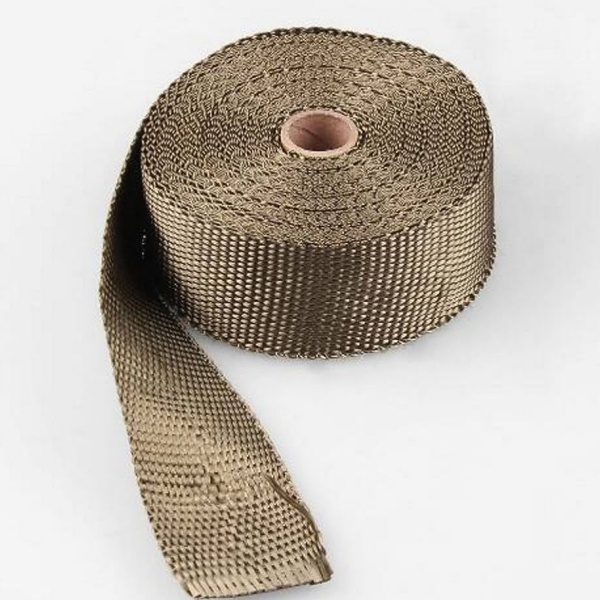
BSTFLEXBăng quấn ống xả titan đenSản phẩm này được sản xuất từ sợi có nguồn gốc từ đá núi lửa và có nhiều khổ rộng và chiều dài cuộn khác nhau. BSTFLEX xác định sản phẩm này có khả năng chịu nhiệt trực tiếp lên đến 1800°F với khả năng chịu nhiệt gián đoạn cao hơn.
Ưu điểm thực tiễn của vật liệu bọc gốc bazan không chỉ nằm ở khả năng chịu nhiệt cao hơn. Nó còn có xu hướng giữ được độ dẻo dai để bám sát các đường ống dẫn khí thải và các đoạn uốn cong của ống xả mà không cần đến hệ thống cách nhiệt cứng nhắc.
Khi nhiệt độ khí thải vượt quá phạm vi hoạt động thực tế của sợi thủy tinh tiêu chuẩn, các loại vải có hàm lượng silica cao trở thành lựa chọn phù hợp hơn.
Sợi silica có hàm lượng silica cao hơn nhiều so với sợi thủy tinh E-glass thông thường và được sử dụng trong các ứng dụng đòi hỏi khả năng chịu nhiệt độ cao liên tục.
BSTFLEX sản xuấtỐng bọc cách nhiệt chịu nhiệt cao cho ống xả InfernoĐược làm từ sợi filament silica vô định hình có cấu trúc. Sản phẩm được thiết kế để hoạt động ở nhiệt độ lên đến 2000°F (932°C).
Các ứng dụng điển hình bao gồm:
Hệ thống ống xả tăng áp;
Động cơ đua công suất cao;
exhaust manifolds;
high-temperature headers;
industrial exhaust lines;
severe thermal zones where fiberglass may not provide enough temperature margin.
Silica wrap should therefore be considered when the design requirement is driven primarily by temperature rather than cost.
Some exhaust systems require more than simple woven fiber insulation.
Dust generation, surface abrasion, moisture exposure and installation cleanliness may also matter.
For these applications, composite constructions can provide additional properties.
The BSTFLEXSilicone Exhaust Wrap Composite Fiberglass & Silicone Laggingcombines a fiberglass insulation structure with a silicone outer treatment. The coating helps contain loose fibers and creates a more durable, cleaner external surface for applications where an exposed untreated textile is less desirable.
This type of construction can be useful on diesel engines, industrial pipework and equipment where durability and handling characteristics are important alongside thermal insulation.
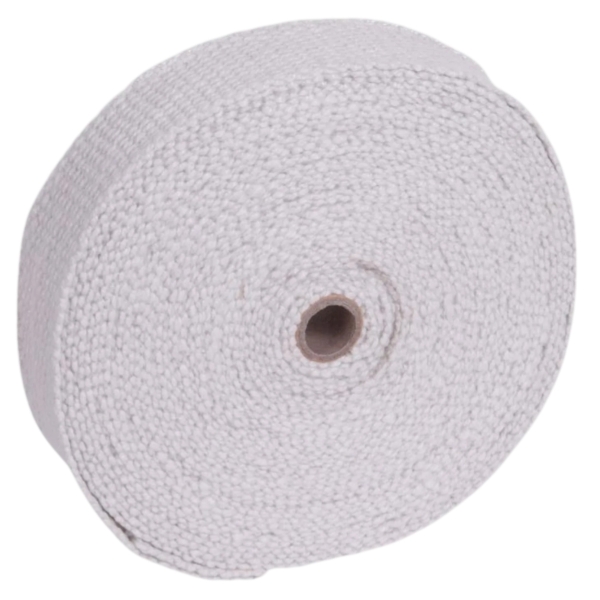
Headers are one of the most common locations forheader wrap.
Individual primary tubes create a large heated surface area, and they often pass close to ignition wiring, brake lines and other heat-sensitive components.
Flexible wrap can follow each primary tube much more easily than a rigid metal shield.
Cast or fabricated exhaust manifolds may also benefit from thermal containment, particularly in compact engine bays.
However, very irregular manifold shapes may be better suited to a removable insulation blanket rather than conventional spiral wrap.
A turbocharger downpipe can be one of the hottest exhaust components outside the turbine housing itself.
Using high-temperatureexhaust heat wraparound a downpipe can reduce radiant heat reaching:
intake piping;
wiring;
brake systems;
bulkheads;
transmission tunnels;
nearby body structures.
For severe turbo applications, basalt or silica materials are generally more relevant than entry-level fiberglass wrap.
Motorcycles expose exhaust headers close to the rider and surrounding bodywork.
For this reason,motorcycle exhaust wrapis used for both thermal management and surface-contact protection.
Fiberglass and basalt-based wraps are commonly selected depending on the temperature and desired appearance.
Diesel engines and generators often operate for long periods under sustained load.
In these systems, exhaust insulation is primarily about:
personnel protection;
nearby equipment protection;
compartment temperature control;
reduction of radiant heat.
Larger industrial systems may use wrap, lagging, removable blankets or combinations of these technologies.
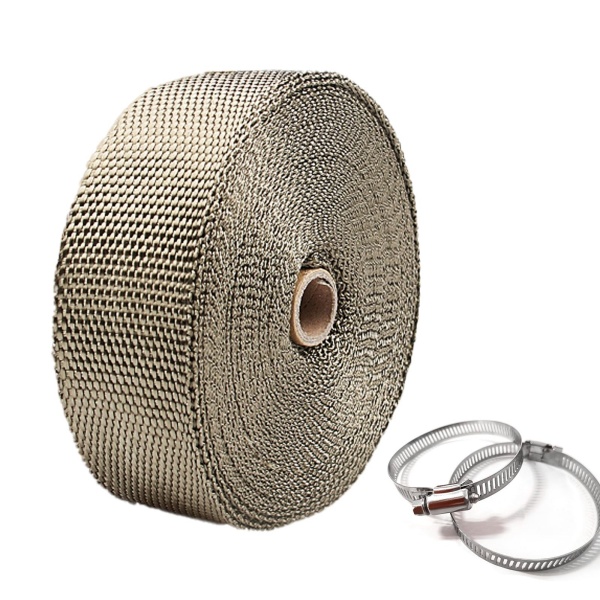
Both products insulate exhaust components, but their construction and installation are different.
Exhaust wrapis installed by winding narrow textile tape around the pipe.
It is best suited to:
headers;
long straight pipe sections;
small-diameter exhaust tubes;
collectors;
downpipes;
motorcycle exhaust systems.
Anexhaust insulation blanketis a preformed textile assembly designed to fit a specific component.
Blankets are more appropriate for:
turbochargers;
large manifolds;
silencers;
large-diameter exhaust pipe;
components that require regular service access.
If the component must be removed frequently, a reusable blanket may be more practical than permanently wrapped tape.
A metal heat shield works differently.
Instead of placing insulation directly against the exhaust pipe, a metal shield normally reflects or blocks radiant heat with an air gap between the hot component and the shield.
This makes metal heat shields useful where:
airflow is available;
the hot component must remain exposed;
service access is important;
direct pipe insulation is not desirable.
Exhaust wrap is generally easier to install around complicated tubing geometry, while a rigid heat shield can be more appropriate when controlling directional radiant heat.
BSTFLEX supplies both textile wraps andexhaust heat shield insulation, allowing the thermal protection method to be matched to the actual installation rather than forcing every system into the same solution.
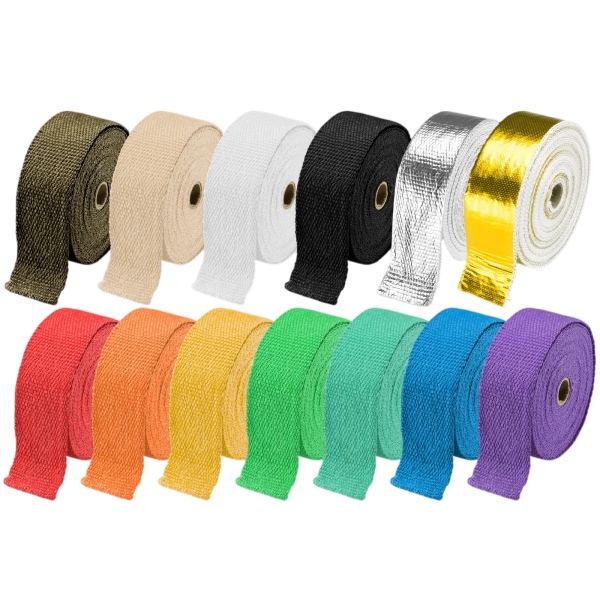
A useful selection process starts with five questions.
Do not select material only from engine horsepower or vehicle type.
Consider both:
continuous operating temperature;
short-duration peak temperature.
A naturally aspirated street engine, turbocharged racing vehicle and industrial diesel generator can have very different thermal requirements.
Stainless steel, mild steel and other exhaust alloys respond differently to repeated heat cycles and moisture exposure.
The pipe condition should also be inspected before wrapping.
Do not cover corrosion, cracks or damaged welds simply to hide them.
A narrow, flexible wrap is useful around:
tight-radius bends;
small motorcycle headers;
complex collectors.
Wider wrap covers straight pipe more quickly but can be harder to position around complicated geometry.
Road vehicles, marine equipment and industrial engines may encounter:
water;
mud;
salt;
oil;
fuel;
dust.
These factors should be considered when choosing both the wrap and any surface treatment.
If the pipe or component needs frequent inspection, a removable jacket or blanket may reduce maintenance time.
BSTFLEX also manufacturesHigh Velocity Jacket Exhaust System Wrap, a jacket-style approach for applications where conventional spiral wrapping is not the preferred installation method.
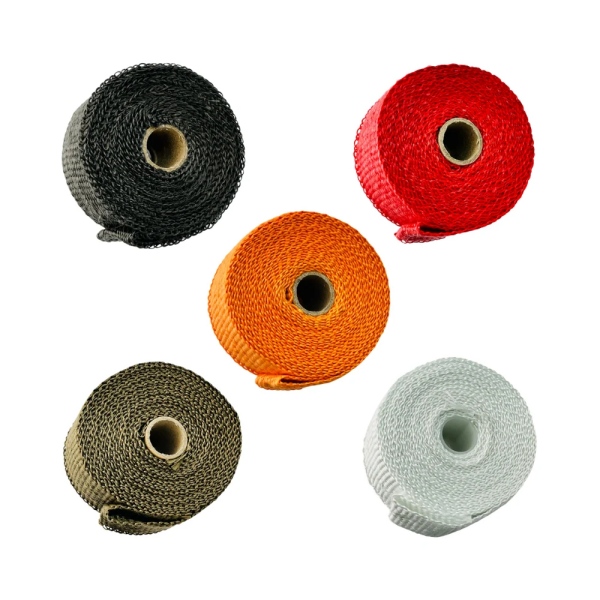
Two widths dominate many automotive installations:
1 inch wrap
Better suited to:
small-diameter tubing;
tight bends;
compact motorcycle headers;
complex collectors.
2 inch wrap
Better suited to:
longer straight exhaust pipes;
larger headers;
downpipes;
applications where faster installation is important.
BSTFLEX also manufactures wider exhaust wrap formats for large-diameter pipes and industrial installations.
The correct width should therefore be selected according to pipe diameter and geometry rather than assuming wider wrap is always better.
Even the correct exhaust wrap can perform poorly if installed incorrectly.
A typical installation involves:
Inspecting and cleaning the exhaust pipe.
Determining the starting point and wrap direction.
Maintaining a consistent overlap.
Working progressively around bends without creating large gaps.
Securing the beginning and end using stainless-steel ties or clamps.
Checking nearby brackets, sensors and moving components.
Re-inspecting the installation after the first thermal cycles.
The exact overlap should follow the product specification and application requirement.
Too little overlap may leave uneven thermal coverage.
Excessive overlap consumes more material and creates unnecessary thickness.
There is no single roll length that fits every exhaust system.
Material consumption depends on:
pipe outside diameter;
total pipe length;
wrap width;
overlap percentage;
number of bends;
collector geometry;
whether multiple layers are required.
For an OEM or production project, the better approach is to calculate material use from an actual drawing, pipe sample or installation specification rather than estimating from vehicle type alone.
BSTFLEX supports custom roll widths and lengths for volume projects where standard retail-sized rolls are inefficient.
Exhaust wrap is effective thermal insulation, but it has limits.
It does not replace:
repair welding;
exhaust leak repair;
damaged flange replacement;
structural pipe repair;
proper heat shielding around extremely sensitive components;
routine inspection of the exhaust system.
It should be treated as part of an engineered thermal management system.
For some installations, the best solution may combine:
exhaust wrap;
removable insulation blankets;
reflective barriers;
metal heat shields;
protective sleeves for nearby wiring and hoses.
| Exhaust Application | Common Material Direction |
|---|---|
| General automotive header | Fiberglass |
| Motorcycle exhaust | Fiberglass or basalt |
| Performance header | Basalt / titanium-style |
| Turbo downpipe | Basalt or silica |
| Extreme-temperature header | Silica |
| Industrial exhaust pipe | Fiberglass, silica or composite |
| Diesel engine exhaust | Fiberglass, silica or silicone composite |
| High-abrasion area | Reinforced or composite construction |
The final choice should always be based on actual temperature, environment and installation design.
For manufacturers and distributors, exhaust wrap specification goes beyond choosing a fiber type.
Production requirements may include:
non-standard widths;
specific roll lengths;
private-label packaging;
custom colors;
material identification;
stainless-steel fixing ties;
application-specific constructions;
sample-based development.
BSTFLEX manufactures exhaust thermal protection products for OEM, distributor and industrial applications and can develop specifications around the exhaust system rather than supplying only fixed retail configurations.
Explore the completeBSTFLEX Exhaust and Header Heat Wrap rangefor fiberglass, basalt, silica, composite and specialty exhaust insulation products.
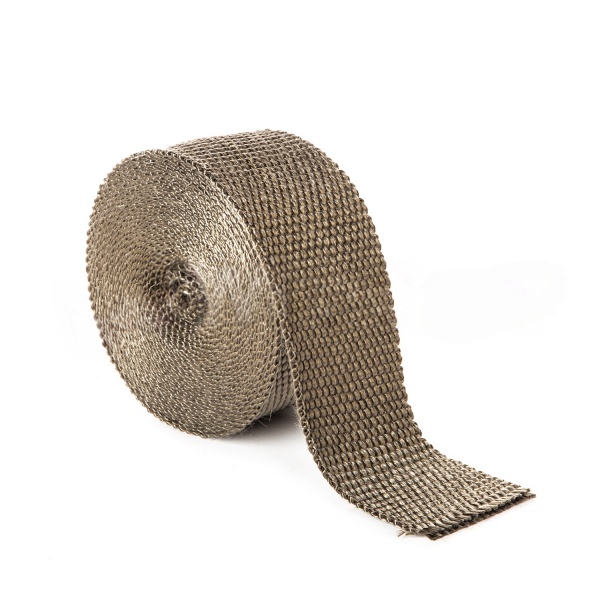
Exhaust wrap is a woven high-temperature insulation tape installed directly around exhaust pipes, headers, manifolds or downpipes to reduce radiant heat and improve thermal containment.
In most automotive and industrial applications, the terms refer to the same general product family. “Exhaust heat wrap” emphasizes its thermal insulation function, while “exhaust wrap” is the broader commercial term.
Không có vật liệu nào là tốt nhất tuyệt đối. Sợi thủy tinh phù hợp với nhiều ứng dụng thông thường, đá bazan thường được lựa chọn cho các hệ thống hiệu suất cao hơn, và vật liệu bọc có hàm lượng silica cao thích hợp cho các điều kiện nhiệt độ khắc nghiệt hơn.
Đúng vậy. Ống xả là một ứng dụng phổ biến của vật liệu bọc chịu nhiệt cao. Vật liệu cần được lựa chọn dựa trên nhiệt độ khí thải thực tế liên tục và nhiệt độ khí thải cực đại.
Thông thường là không. Các sản phẩm được quảng cáo là màng bọc ống xả bằng titan thường được làm từ sợi có nguồn gốc từ đá bazan hoặc đá núi lửa chứ không phải titan kim loại.
Không. Lớp bọc cách nhiệt tiêu chuẩn cho ống xả chỉ nhằm mục đích quản lý nhiệt, chứ không phải để sửa chữa cấu trúc đường ống hoặc khắc phục rò rỉ.
Ống bọc loại hẹp thường dễ lắp đặt hơn xung quanh các đường ống có đường kính nhỏ và các khúc cua gấp, trong khi ống bọc loại rộng hơn sẽ nhanh hơn trên các ống xả lớn hơn hoặc thẳng hơn.

No.10, Chuangxin North Road, Nanshan Park, Ningguo Economic and Technological Development Zone, Ningguo City, Anhui Province, China
điện thoại/Whatsapp : 0086-15856303740
e-mail : sales@bstbraidedsleeve.com
Skype : vanesa-cheng