Bạn đang tìm kiếm cái gì?

Quick answer: keep a turbine-housing turbo blanket out of service when it is soaked with oil or fuel, has exposed insulation, opened seams, damaged attachment points, failed retention hardware, severe distortion, uncertain identity or a fit that no longer clears the wastegate and nearby lines. A blanket should not be approved for reuse solely because its outer cover still looks acceptable.
There is no universal replacement interval for every turbo blanket. Service life depends on the complete construction, turbine-housing temperature, duty cycle, vibration, contamination, installation accuracy and whether the product is designed to be removed after heat cycling. Inspection therefore needs both a condition check and a review of the product history.
This guide concerns the flexible insulation blanket fitted around the turbocharger turbine housing. It does not cover a compressor-side containment product. For that separate safety application, see Turbo Safety Blanket Inspection.
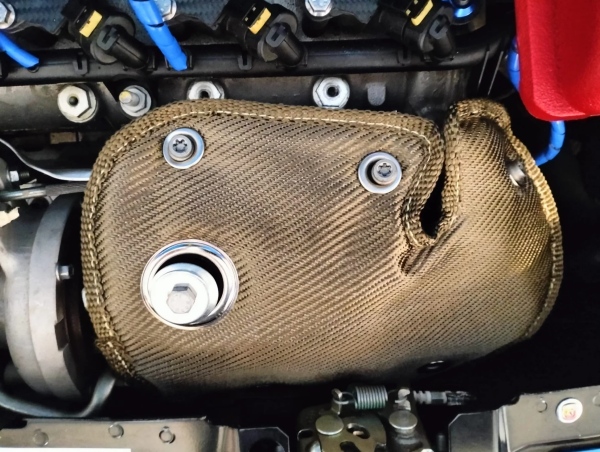
An inspection should lead to one of four documented decisions:
| Decision | Typical Basis | Required Action |
|---|---|---|
| Continue in service | The blanket remains correctly fitted, dry, secure and within the approved condition criteria. | Record the inspection and the next review trigger. |
| Correct the installation | The blanket itself appears serviceable, but approved hardware is loose, incorrectly routed or missing. | Shut down, cool the system and correct the installation with the specified components. Reinspect the blanket and anchor areas before use. |
| Quarantine for evaluation | The condition is uncertain because of contamination, unusual heat exposure, an undocumented repair, an unknown part number or a changed turbocharger configuration. | Keep the blanket out of service and obtain a disposition for the exact product and construction. |
| Replace | The insulation is exposed, seams or attachment points have failed, the blanket is saturated with a flammable fluid, the fit is no longer stable or the product has been rejected after evaluation. | Correct the underlying cause and order a replacement against the current installation, not only the shape of the damaged blanket. |
The decision should be based on the complete assembly: outer cover, hot-face lining, insulation core, seams, edge binding, anchors, springs or lacing wire. Replacing one spring does not restore a blanket whose anchor area or insulation has already failed.
Do not handle or adjust a turbo blanket on a hot turbocharger. Shut down the equipment, prevent unintended starting and allow the turbocharger and surrounding exhaust components to cool according to the applicable service procedure.
Before touching the blanket, record why it is being inspected. Useful inspection triggers include:
Use the product-specific instructions where they define inspection intervals, removal restrictions or replacement criteria. This article provides a purchasing and condition-assessment framework; it does not replace those instructions.
| Inspection Area | What to Look For | Why It Matters |
|---|---|---|
| Installed position | Movement, sagging, bunching, an open gap or a blanket that has rotated away from the approved position. | A shifted blanket can expose the intended coverage area or interfere with nearby parts. |
| Outer cover | Cuts, holes, worn-through areas, severe local discoloration, hard spots, blistering, delamination or fluid staining. | The outer cover protects and contains the internal insulation. Surface appearance alone cannot confirm the hidden layers. |
| Seams and edge binding | Broken thread, an opened seam, pulled binding, fraying or insulation visible through an edge. | Seam failure can allow insulation movement and loss of shape. |
| Attachment points | Torn anchor areas, enlarged holes, loose rivets, distorted tabs or anchors pulling away from the blanket. | Retention load is transferred through these areas; local damage is not merely cosmetic. |
| Springs and lacing wire | Missing, stretched, deformed, broken, corroded or incorrectly routed hardware. | Hardware must hold the approved pattern without damaging the blanket or interfering with the turbocharger. |
| Wastegate and actuator clearance | Marks, rubbing, restricted linkage movement or hardware crossing the actuator path. | The blanket and its fasteners must not obstruct required movement. |
| Oil and coolant connections | Wetness, residue, staining or evidence that the blanket has hidden a leak. | Leaks must be corrected before insulation is returned to service. |
| Nearby components | Melted wiring, heat-damaged hoses, contact marks or new hot spots. | These findings can indicate an installation or thermal-management problem that requires more than blanket replacement. |
| Identification and history | Missing label, unknown pattern, undocumented modification or inability to match the blanket to the approved configuration. | Condition cannot be assessed reliably when the construction and intended fitment are unknown. |
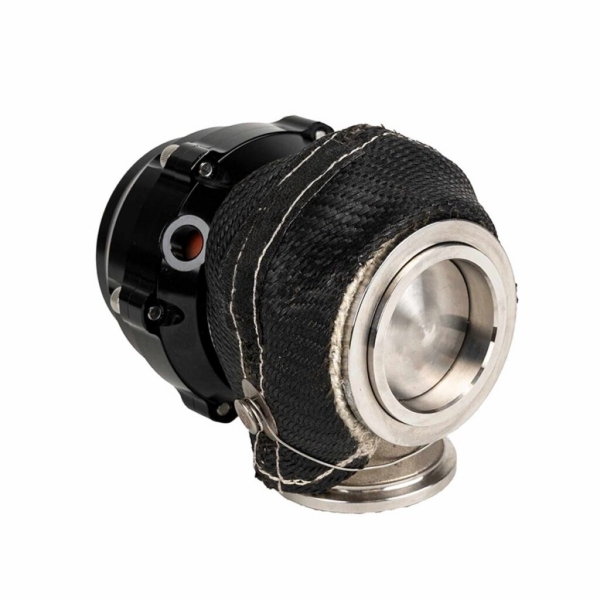
Oil and fuel contamination require immediate attention because a flammable liquid can create a fire hazard when retained near the hot turbine housing. Stop operation safely, correct the leak and keep the contaminated blanket out of service while its condition is assessed.
Do not assume that wiping, washing, solvent cleaning, pressure washing or drying restores the original condition. Whether surface cleaning is permitted depends on the exact outer cover, insulation, stitching and degree of penetration. A light external mark and a blanket that has absorbed fluid through its layers are not equivalent conditions.
Replacement should be strongly considered when:
Coolant or water contamination is not the same fire hazard as fuel, but it still requires leak correction and condition review. Moisture, cleaning chemicals and repeated wetting can affect some constructions, hardware or identification labels. Do not return the blanket to service until the source is corrected and the product is dry and acceptable under its instructions.
Some turbo blanket constructions may release a temporary odor or light smoke during their initial conditioning cycles. That behavior must be confirmed by the instructions for the actual product; it should not be assumed for every blanket.
A first-use observation should be treated as a warning rather than normal conditioning when:
Do not use repeated engine runs to “burn off” an unknown fluid. Shut down, cool the assembly and inspect the turbocharger area. Correcting a leak or an installation error is more important than preserving the blanket.
Repeated heating and cooling can change the feel and shape of textile insulation. Some constructions become stiffer or less flexible after curing and thermal cycling. Stiffness alone is not a universal pass/fail criterion, but it affects removal, reinstallation and the ability of the blanket to conform to the housing.
Inspect for changes that indicate loss of serviceability:
There is no single number of heat cycles after which every turbo blanket must be replaced. A daily-driven vehicle, a racing application, a marine engine and a continuously loaded generator expose the blanket to different temperatures, durations, vibration and maintenance practices. Use condition-based criteria together with the approved service plan.
Do not assume that every turbo blanket is reusable after removal. Some constructions are intended to remain fitted after they have been heat cycled because bending a cured blanket can crack or disturb the insulation. Other products may permit controlled removal and reinstallation when their inspection criteria are met.
Before removing a blanket for routine service, confirm:
A removed blanket should not be reinstalled when it has lost its identification, cannot hold the approved shape, has exposed insulation, has damaged seams or anchors, contains unapproved contamination, or no longer fits without excessive force.
For fastening selection and hardware checks, see Turbo Blanket Installation Hardware: Springs, Lacing Wire and Attachment Points.
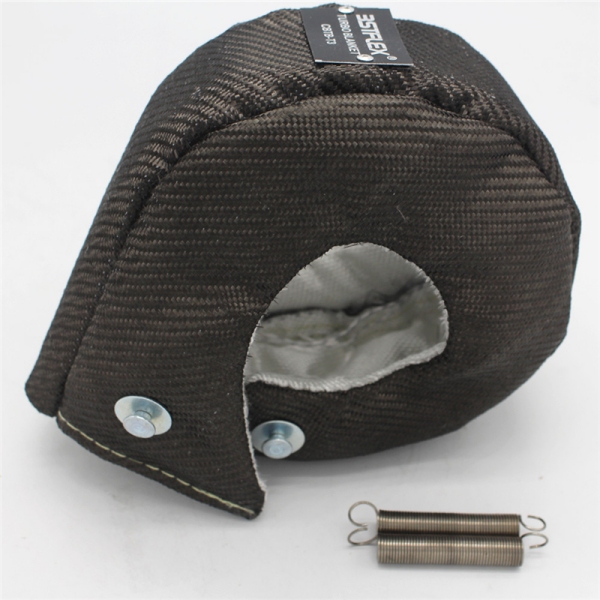
Replacement hardware may be sufficient only when the blanket body, anchor areas, seams and fit remain acceptable and the correct replacement component is available.
Hardware-only correction may be appropriate when:
Replace or quarantine the complete blanket when:
Do not add stronger springs, extra wire or new holes to compensate for a pattern or fitment problem. Hardware should retain an approved blanket; it should not force an unsuitable blanket onto the housing.
A replacement turbocharger can use a different turbine-housing outline, A/R, wastegate arrangement, actuator position, outlet connection or line routing even when the general model name appears similar.
Recheck fitment when any of the following changes:
Do not approve the old blanket solely because it can be stretched or laced around the new housing. Review the new installation as a fitment project. The Turbo Blanket vs Heat Shield guide can also help when a changed installation requires a different thermal-protection strategy.
The following conditions are practical reasons to remove a turbine-housing blanket from service and replace it or obtain a formal disposition:
| Condition | Recommended Disposition |
|---|---|
| Oil- or fuel-saturated insulation | Correct the leak and replace unless the exact product has an approved recovery procedure and the blanket passes that procedure. |
| Exposed insulation or hot-face material | Replace or submit for manufacturer evaluation; do not patch with an unrelated fabric or tape. |
| Opened seam, broken binding or torn anchor area | Keep out of service. Replacement is generally required unless an approved repair process exists. |
| Blanket cannot hold the approved shape | Replace; stronger hardware is not a valid correction for lost dimensional stability. |
| Persistent smoke or odor from an unknown source | Stop, cool and inspect. Correct leaks or contact points before deciding whether the blanket is serviceable. |
| Contact with moving actuator or linkage | Remove from service, inspect for damage and correct the fitment. Replace if the pattern or blanket condition cannot be approved. |
| Unknown product identity or undocumented modification | Quarantine until the construction and fitment can be established. Replace when suitability cannot be documented. |
| New turbocharger or changed housing | Perform a new fitment review; order a new pattern when the old blanket does not match the approved geometry. |
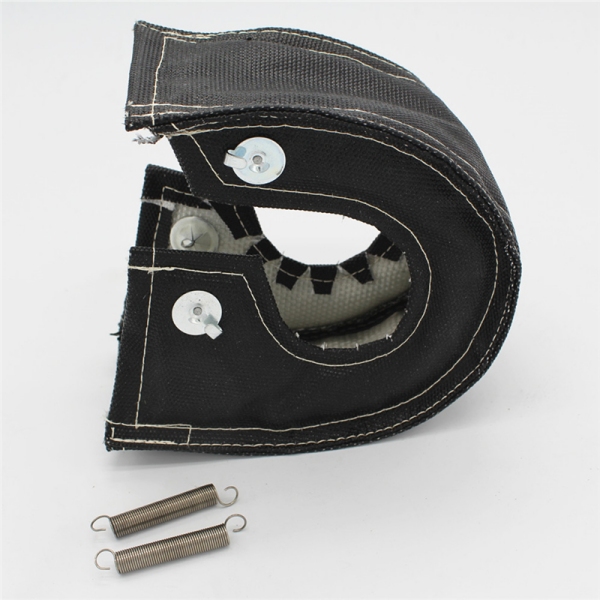
Statements such as “replace every year” or “a turbo blanket lasts several years” are too broad unless they are tied to a particular product, construction and operating profile.
A useful service plan identifies:
For fleet, generator, marine or OEM programs, keep photographs of the approved installation with the service record. This makes it easier to identify movement, changed line routing or missing hardware during later inspections.
Do not use a stretched, burned or modified blanket as the only pattern reference. Provide current information from the turbocharger and installation.
| Replacement RFQ Field | Information to Provide |
|---|---|
| Reason for replacement | Normal service, contamination, seam damage, hardware failure, changed turbocharger or uncertain history. |
| Turbocharger identification | Manufacturer, model, part number and turbine-housing reference. |
| Housing and installation | Dimensions, marked photographs, wastegate arrangement, actuator and line clearances. |
| Previous blanket | Supplier or internal part number, order reference, pattern revision and photographs before disposal. |
| Construction | Required titanium, carbon, aluminized fabric or silicone-coated fabric outer cover, plus any confirmed internal or reinforcement requirements. |
| Hardware | Springs, lacing wire, anchors, spare quantities and packaging requirements. |
| Operating conditions | Continuous and peak conditions, duty cycle, environment and the component requiring protection. |
| Commercial requirements | Sample quantity, production quantity, logo, labeling, instructions, packaging and required documents. |
BSTFLEX supplies standard and custom turbine-housing insulation through its turbo heat shield blanket range. Drawing-based and private-label projects can use the OEM and custom turbo blanket manufacturing guide.
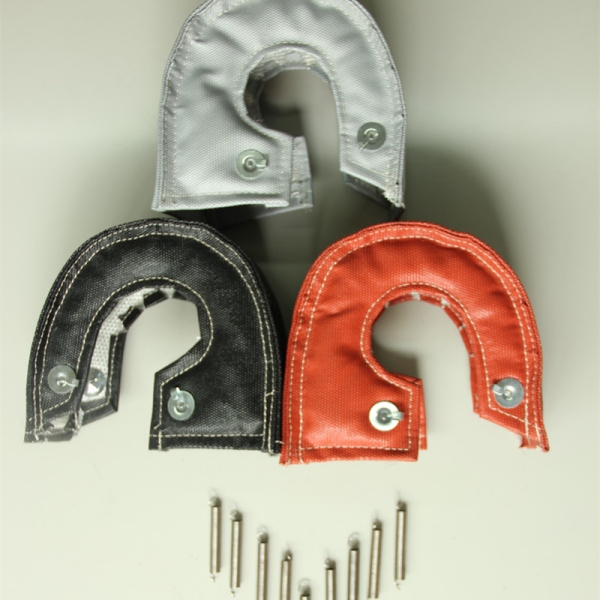
An OEM or private-label program should define inspection and replacement information before production release. The supplied documentation can include:
Do not publish a universal cleaning method, replacement interval or reuse claim unless it has been approved for the exact construction being supplied. The service document should match the blanket BOM and application, not a generic product family.
Replace or quarantine it when insulation is exposed, seams or attachment points have failed, the blanket is saturated with oil or fuel, the fit has become unstable, the product has been damaged during removal or its identity and approved configuration cannot be established.
Do not assume that cleaning restores suitability. Correct the leak first. Surface wiping may be permitted for some outer covers, but absorbed oil or fuel can remain within the insulation and create a fire hazard. Follow the instructions for the exact construction or replace the blanket when the contamination cannot be safely resolved.
Only when reuse is permitted for that construction and the blanket passes the required inspection. Heat-cycled blankets can become stiff or brittle, and bending them during removal may damage the insulation, seams or anchors.
Some constructions may produce temporary odor or light smoke during initial conditioning, but this must be confirmed by the product instructions. Persistent smoke, an oil or fuel smell, wet residue or worsening smoke under load requires shutdown and inspection.
There is no universal service-life figure. Life depends on construction, temperature, exposure duration, vibration, contamination, fitment and maintenance. Use product-specific inspection criteria and condition-based replacement decisions.
Yes, when the blanket body, anchor areas, seams and fit remain acceptable and the correct replacement hardware is used. Replace or quarantine the whole blanket when the anchor area, insulation or surrounding construction is damaged.
No. A turbo heat blanket insulates the turbine housing. A turbo safety, shatter or containment blanket is a separate compressor-side product intended for containment requirements. Their inspection and replacement criteria should not be mixed.
Send the turbocharger identification, current installation photographs, turbine-housing dimensions and the reason the existing blanket was removed. Include photographs of damage or contamination before cleaning or disposal where it is safe to do so.
For repeat production, provide the previous order, drawing or pattern revision and state any change in turbocharger, hardware, outer cover, insulation, branding or packaging. A replacement quotation should address the cause of removal rather than simply reproduce a damaged blanket.
Send Your Turbo Blanket Inspection and Replacement Requirements to BSTFLEX

No.10, Chuangxin North Road, Nanshan Park, Ningguo Economic and Technological Development Zone, Ningguo City, Anhui Province, China
điện thoại/Whatsapp : 0086-15856303740
e-mail : sales@bstbraidedsleeve.com
Skype : vanesa-cheng