Bạn đang tìm kiếm cái gì?
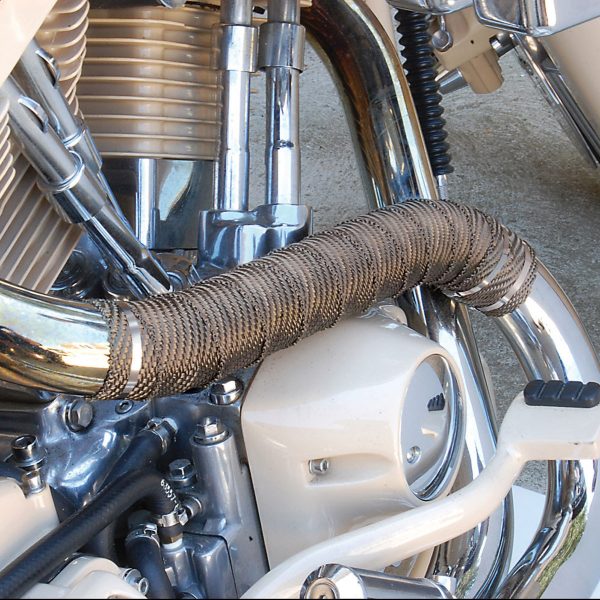
Correct installation is essential to achieve the full thermal performance and service life of titanium exhaust wrap . Improper wrapping techniques can reduce insulation efficiency, accelerate material wear, and lead to premature failure under high-temperature conditions.
This guide explains a proven, step-by-step installation method used by exhaust fabricators and performance builders for motorcycle, turbo, and high-temperature exhaust systems.
Titanium exhaust wrap is engineered to operate in extreme thermal environments. However, its performance depends heavily on how evenly the material is applied, how securely it is fixed, and how it is cured during initial heat cycles.
Proper installation helps to:
Maximize radiant heat reduction
Maintain consistent insulation thickness
Prevent loosening under vibration
Extend the operational lifespan of the wrap
Before installation, ensure the following items are available:
Titanium exhaust wrap (appropriate width and length)
Stainless steel locking ties or clamps
Clean water for pre-wetting
Scissors or cutting tool
Protective gloves and eye protection
Using stainless steel fasteners is strongly recommended for long-term durability in high-temperature exhaust environments.
The exhaust pipe should be clean and free from oil, grease, rust flakes, or loose debris. Contaminants trapped beneath the wrap can cause uneven curing and localized hot spots.
If installing on a used exhaust system, allow it to cool completely before beginning the process.
Lightly soaking the wrap in clean water before installation is recommended.
Pre-wetting provides several advantages:
Improves flexibility and conformity around tight bends
Reduces airborne fibers during handling
Helps the wrap settle evenly during the first heat cycle
The wrap should be damp, not dripping wet.
Begin wrapping at the exhaust outlet or the lowest point of the exhaust system, working toward the engine or turbocharger.
This orientation helps prevent exhaust flow and vibration from lifting the wrap edges over time.
Anchor the starting end securely using a stainless steel tie before proceeding.
Wrap the material with a consistent overlap of approximately 25–50% of the wrap width. Maintaining uniform overlap is critical for even insulation thickness and effective heat containment.
Avoid gaps or uneven spacing, particularly around bends and joints, where heat concentration is highest.
In addition to securing the start and end points, use stainless steel ties at intermediate sections where necessary, especially on long straight runs or high-vibration areas.
Ensure fasteners are tight but not excessively compressed, which could damage the fiber structure.
Once wrapping is complete, secure the final end with a stainless steel tie and inspect the entire length of the wrap.
Check for:
Uniform overlap
Firm attachment without loose sections
Proper coverage of high-temperature zones
Trim any excess material cleanly.
During the first engine run, the titanium exhaust wrap will go through a curing process. Light smoke or odor may be present as residual moisture evaporates and the fibers settle into position.
This is normal and temporary.
Allow the engine to idle and gradually reach operating temperature. Avoid aggressive driving during the first heat cycle to ensure proper curing.
Installing the wrap dry without pre-wetting
Inconsistent overlap leading to hot spots
Insufficient fastening on long exhaust sections
Wrapping over oily or contaminated surfaces
Over-tightening fasteners, damaging the fibers
Avoiding these mistakes significantly improves long-term performance.
After installation, periodically inspect the exhaust wrap for signs of loosening, abrasion, or surface damage—especially in high-vibration or off-road applications.
Properly installed titanium exhaust wrap typically requires minimal maintenance and provides extended service life compared to standard fiberglass exhaust wraps.
Titanium exhaust wrap is particularly well suited for:
Motorcycle exhaust systems
Turbochargers and downpipes
Racing and high-performance engines
Exhaust systems exposed to continuous high thermal load
For material selection guidance and performance comparison, refer to our Titanium Exhaust Wrap technical overview page.

No.10, Chuangxin North Road, Nanshan Park, Ningguo Economic and Technological Development Zone, Ningguo City, Anhui Province, China
điện thoại/Whatsapp : 0086-15856303740
e-mail : sales@bstbraidedsleeve.com
Skype : vanesa-cheng